
Recreating a Gillow Style Settee – A Bespoke Furniture Commission
One of the things I enjoy most about being a bespoke furniture maker is the opportunity to work on projects that are completely unique, every commission has its own story, but some stay with you because they combine craftsmanship, history and the trust a client places in your hands.
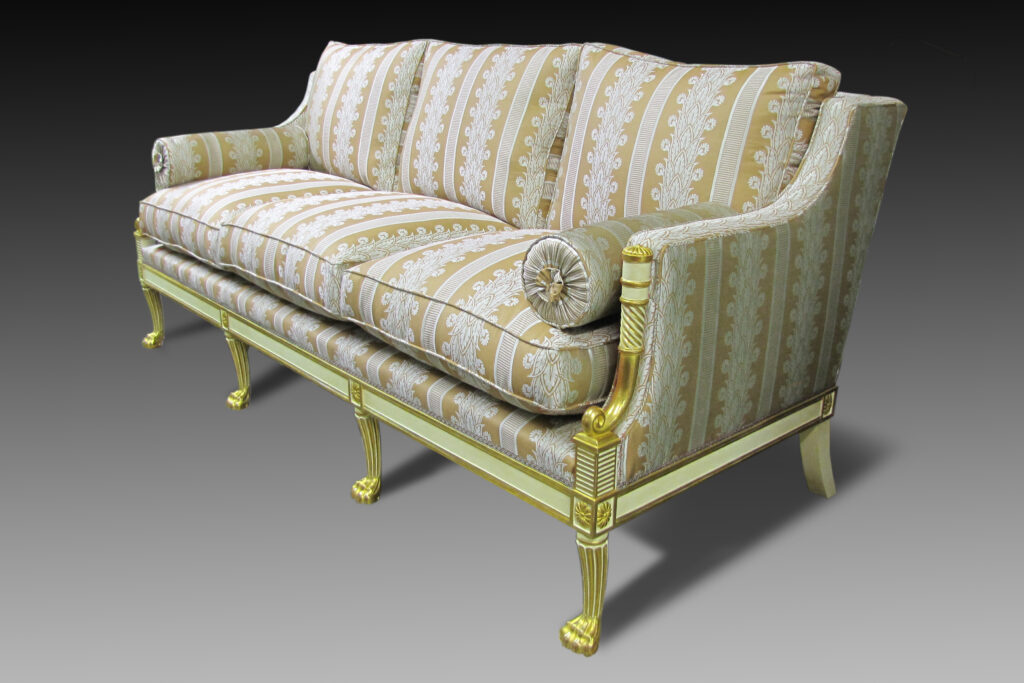
A client came to me with a beautiful Gillow-style chair that had been in their family for many years. They loved its elegance and craftsmanship but wanted something that simply didn’t exist – a matching three-seat settee that looked as though it had always been part of the original suite.
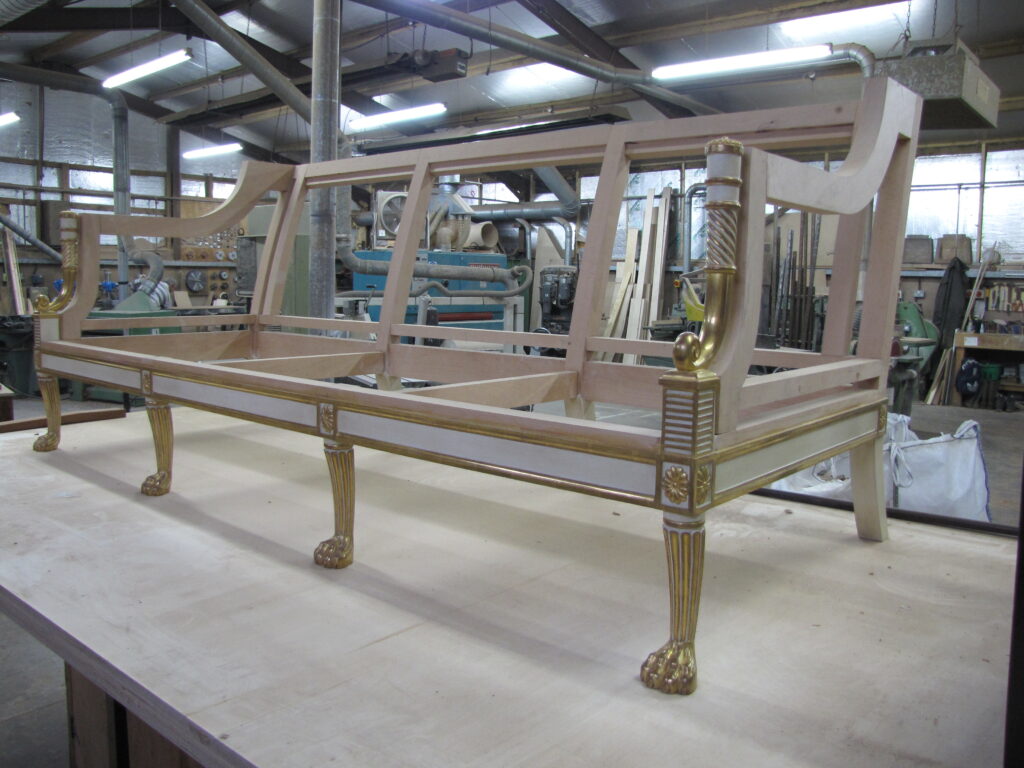
Rather than buying a reproduction, they wanted a handcrafted piece that remained faithful to the original in every detail, that meant carefully studying the proportions, carvings, mouldings and construction before a single piece of timber was selected.
As a cabinet maker specialising in bespoke furniture and high-end joinery, these are the commissions I find most rewarding, they demand patience, traditional skills and an understanding of how the original makers worked hundreds of years ago.
The original design was inspired by the work of Gillows, one of England’s most celebrated furniture makers, founded in Lancaster during the eighteenth century, Gillows earned an unrivalled reputation for producing exceptional furniture for country houses, grand estates, luxury yachts and some of Britain’s finest interiors, their furniture is admired for its elegant proportions, refined carving and outstanding craftsmanship, qualities that continue to inspire furniture makers today.
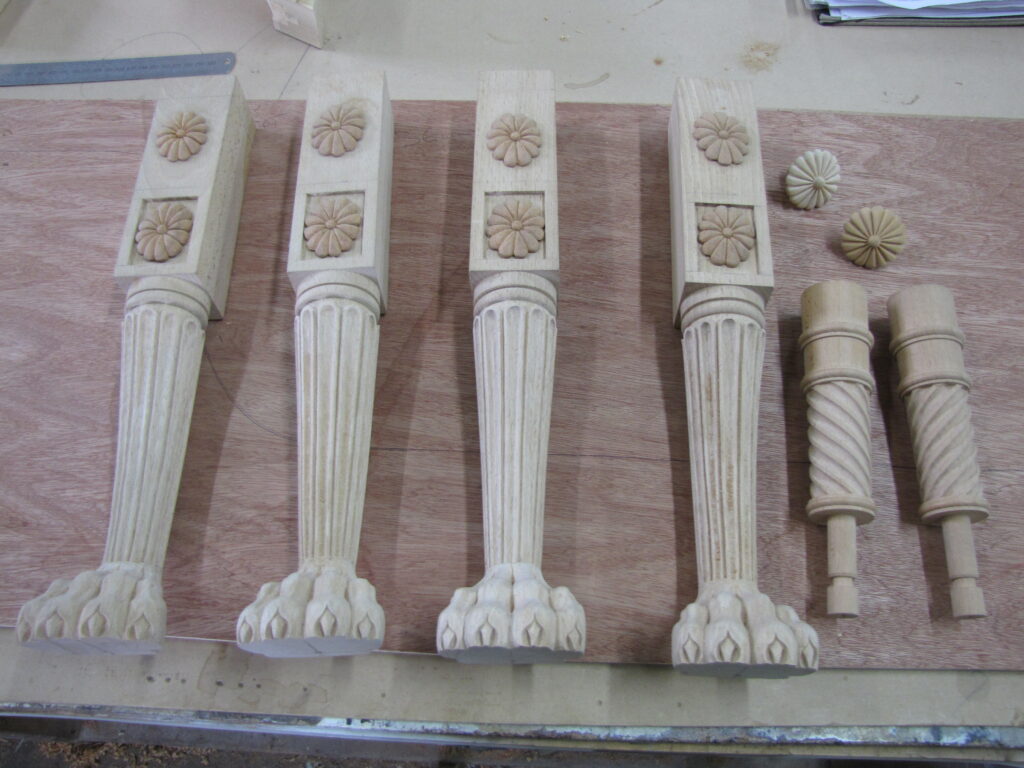
With the original chair as my guide, every dimension was carefully measured and every detail considered, although modern machinery has its place in a workshop, many of the defining features were shaped and refined by hand, and traditional cabinet-making techniques allowed subtle variations in the carving, giving the finished piece the character and individuality expected of handmade furniture rather than the uniform appearance of mass production.
The frame was traditionally jointed in solid beech before each carved section was individually finished. the decorative details were parcel water gilt over a flat oil base colour, echoing the appearance of the original chair while allowing the new settee to develop its own character, finally, it was upholstered with swab and bolster cushions to complete the piece.
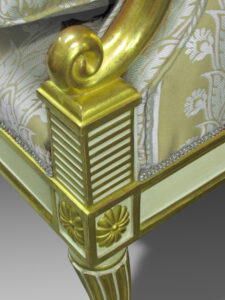
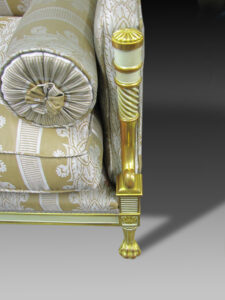
When the finished settee stood alongside the original chair, it felt as though it had always belonged there. That is always my aim with commissions like this, not to create an obvious copy, but to design and make a piece that respects the original craftsmanship while becoming part of its continuing story.
Many people think of bespoke furniture as something entirely contemporary, but some of the most satisfying commissions involve interpreting historic designs for modern homes, whether recreating a period piece, designing a bespoke library, crafting a solid oak dining table or producing specialist architectural joinery, the principles remain the same: careful design, exceptional materials and uncompromising attention to detail.
Keeping traditional cabinet-making skills alive is something I care deeply about, in an age of mass-produced furniture, there is still enormous value in creating handcrafted furniture using time-honoured techniques, every commission is designed to last for generations, combining the beauty of fine timber with the craftsmanship that has defined British furniture making for centuries.
John Beavan Ltd
Specialist Historic and Architectural Joinery
Worcestershire | Working throughout the UK
www.johnbeavan.com
01885 410549
Specialist Historic and Architectural Joinery
Worcestershire | Working throughout the UK
www.johnbeavan.com
01885 410549